
As valas abertas
DOI:
https://doi.org/10.14195/2182-8830_5-1_12Resumo
as valas abertas ++ des fossés ouverts ++ open ditches é um poema composto por 40 linhas com o máximo de 80 caracteres por linha. O poema explora regras de composição e temas presentes no conto "A Biblioteca de Babel" (1941) de Jorge Luis Borges. O poema foi criado como resposta a um desafio, Langlibabex (2014), uma peça de poesia simultnea multilíngue desenvolvida em colaboração com Claire Donato e Luc Dall’Armellina.
Em as valas abertas ++ des fossés ouverts ++ open ditches coexistem níveis e funções plurais de modos de leitura, visto que o navegador e a voz humana reproduzem a leitura do código fonte com uma saída visual e emissão sonora distintas. A voz humana apresenta uma leitura literal do código HTML, enquanto que a leitura do navegador omite certas passagens que estão inseridas dentro de marcadores HTML inventados e não-estandardizados, que se relacionam com o corpo humano dentro do marcador <body>. Os vários corpos realçam fricções e tensões entre agentes humanos e não-humanos na sua relação com a linguagem e o código: as linguagens ditas "naturais" e as linguagens de programação.
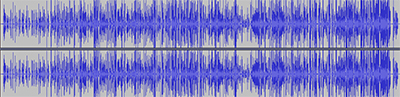
Na altura em que o poema foi escrito, corpos vivos cavavam inúmeras valas abertas na Ucrnia, que estavam já destinadas a futuros corpos mortos, mas desconhecidos. O poema entrelaça este facto com os factos ficcionais de Borges. Foi composto e gravado em Paris, em Novembro de 2014, em português, inglês, francês e HTML. O poema e o ficheiro mp3 podem ser descarregados em http://alvaroseica.net/works/as-valas-abertas.html
Downloads
Downloads
Ficheiros Adicionais
Publicado
Como Citar
Edição
Secção
Licença
MATLIT oferece acesso aberto integral a todos os números. Os autores que publicam nesta revista concordam com os princípios seguintes:
- Os autores mantêm a posse do copyright e concedem à revista o direito de fazer a primeira publicação do seu trabalho nos termos de uma licença Creative Commons Attribution 4.0 International (CC BY 4.0), que permite a terceiros partilharem o trabalho com a condição de atribuição de autoria e de referência à publicação inicial nesta revista.
- Os autores podem fazer contratos adicionais para a distribuição não-exclusiva da versão do trabalho publicada pela revista (por exemplo, publicá-la num repositório institucional ou num livro), com a condição de referirem a publicação inicial nesta revista.
- É permitido aos autores publicarem o seu trabalho em linha (por exemplo, em repositórios institucionais ou no seu próprio sítio web) antes e durante o processo de arbitragem, já que isso proporciona interações produtivas, assim como a possibilidade de citações mais cedo e em maior quantidade do artigo publicado (Ver The Effect of Open Access).
- Uma licença CC em formato legível por máquina encontra-se inserida em todos os artigos publicados pela MATLIT.
MATLIT embraces online publishing and open access to all issues. Authors who publish with this journal agree to the following terms:
- Authors retain copyright and grant the journal right of first publication with the work simultaneously licensed under a Creative Commons Attribution 4.0 International (CC BY 4.0), that allows others to share the work with an acknowledgement of the work's authorship and initial publication in this journal.
- Authors are able to enter into separate, additional contractual arrangements for the non-exclusive distribution of the journal's published version of the work (e.g., post it to an institutional repository or publish it in a book), with an acknowledgement of its initial publication in this journal.
- Authors are permitted and encouraged to post their work online (e.g., in institutional repositories or on their website) prior to and during the submission process, as it can lead to productive exchanges, as well as earlier and greater citation of published work (See The Effect of Open Access).
- A CC licensing information in a machine-readable format is embedded in all articles published by MATLIT.
- Attribution ” You must give appropriate credit, provide a link to the license, and indicate if changes were made. You may do so in any reasonable manner, but not in any way that suggests the licensor endorses you or your use.
- No additional restrictions ” You may not apply legal terms or technological measures that legally restrict others from doing anything the license permits.
Notices:
- You do not have to comply with the license for elements of the material in the public domain or where your use is permitted by an applicable exception or limitation.
- No warranties are given. The license may not give you all of the permissions necessary for your intended use. For example, other rights such as publicity, privacy, or moral rights may limit how you use the material.


